A business assistant for founders
Build your company with an AI business assistant. You stay the founder.
DoAny is an AI company builder for founders. Describe the online business you want to start. It researches the idea, builds the product and website, then posts daily, does outreach, runs the CRM, and answers customers around the clock. You approve the big calls.
No coding required to start. Free plan available. You stay in control.
By the DoAny editorial team · Last reviewed September 3, 2026 · Third-party product, pricing and policy pages checked on that date.
Inside DoAny: meet Annie
See one business goal become useful work.
Share the online business you want to start. Annie researches the idea, builds the product and website, then posts daily, does outreach, runs the CRM, and answers customers around the clock.
✓ You review important actions.


Answers are only the start
What a general AI chatbot leaves you to do
A general AI assistant can help you think, research, or draft. The work after that still lands on you: shape the offer, build the product and website, publish, plan how people will find it, and decide what should happen next.
DoAny keeps research, product, and website work around the same company, then does the work that follows: daily posts, outreach, the CRM, and customer replies. You keep directing the company and approving the big calls.
The plain answer
What is an AI business assistant?
An AI business assistant is software that helps complete defined business work, not only answer questions. It can research, draft, organize, and take supported actions through connected tools. DoAny applies that help to a new online business: it researches the idea and builds the product and website, then posts daily, does outreach, runs the CRM, and answers customers around the clock.
Judge an assistant by the work it can complete, the decisions it leaves with you, and whether you can inspect the result.See the category for yourself
What the main AI assistants actually offer
These captures come from first-party product pages and public agencies, checked on the date shown with each source. They illustrate different jobs in the category. They do not prove performance, and a product page can change after review.
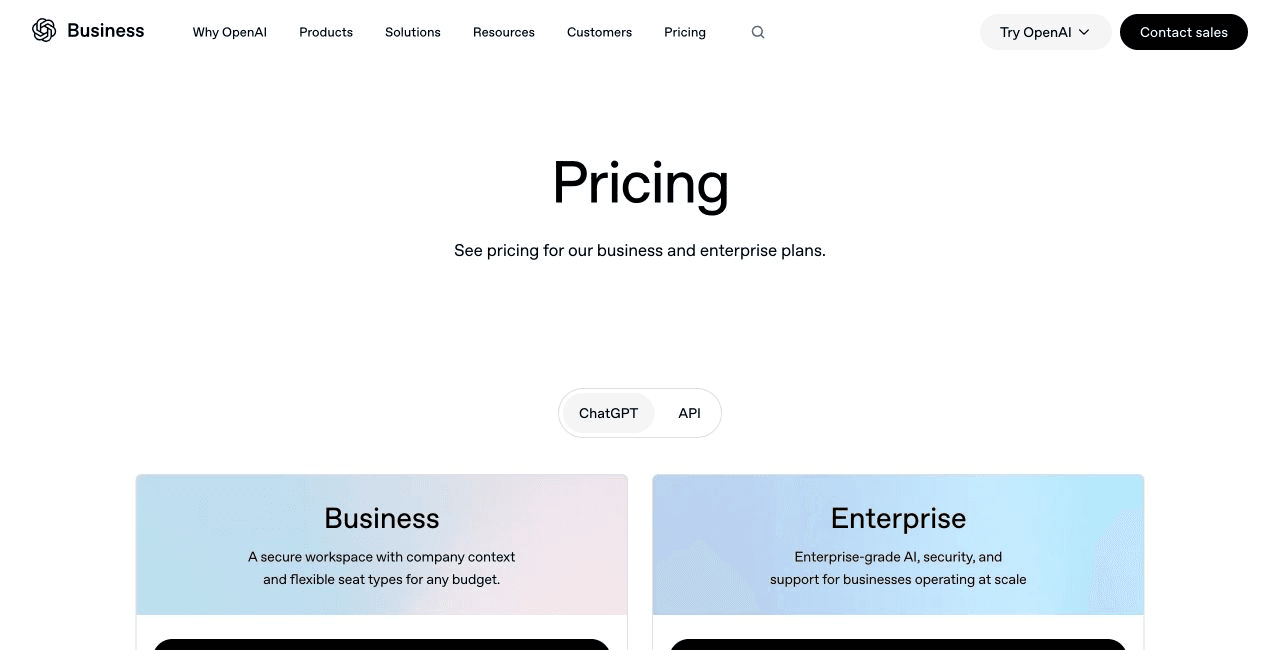
OpenAI’s pricing page shows a dedicated Business offer for a general-purpose AI assistant.
OpenAI: Business pricingofficial product, checked September 3, 2026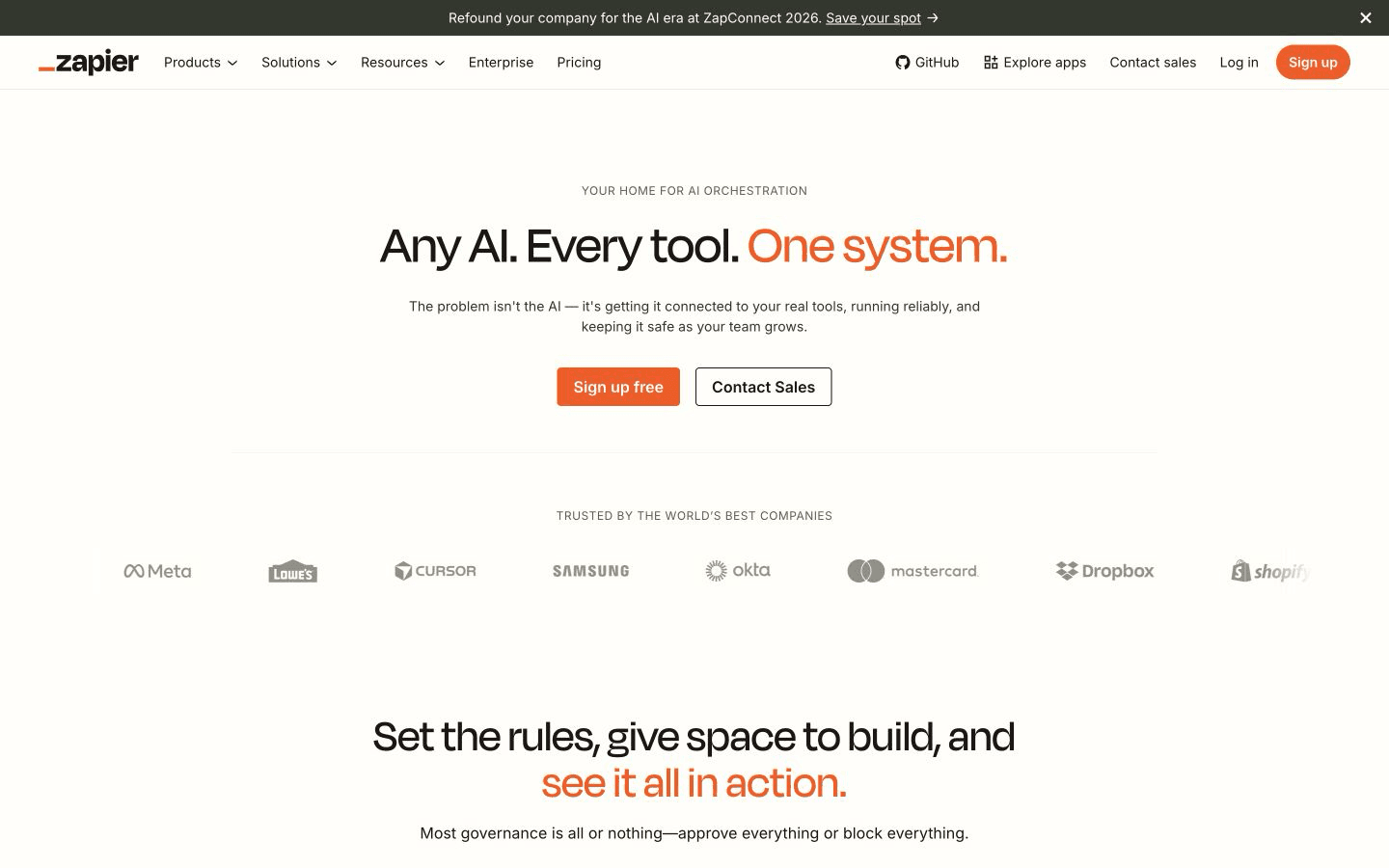
Zapier’s first-party page presents AI around orchestration and connected tools.
Zapier: Zapier AIofficial product, checked September 2, 2026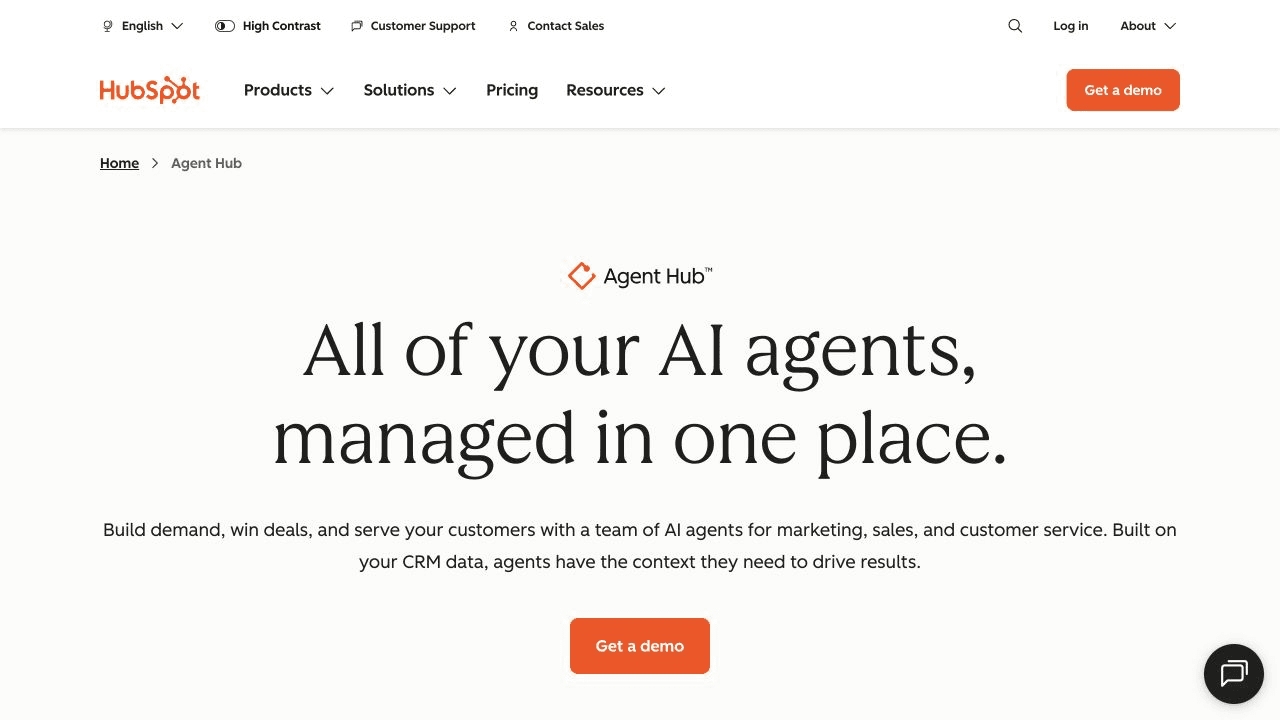
HubSpot’s first-party page presents agents scoped to marketing, sales, and customer service.
HubSpot: Agent Hubofficial product, checked September 3, 2026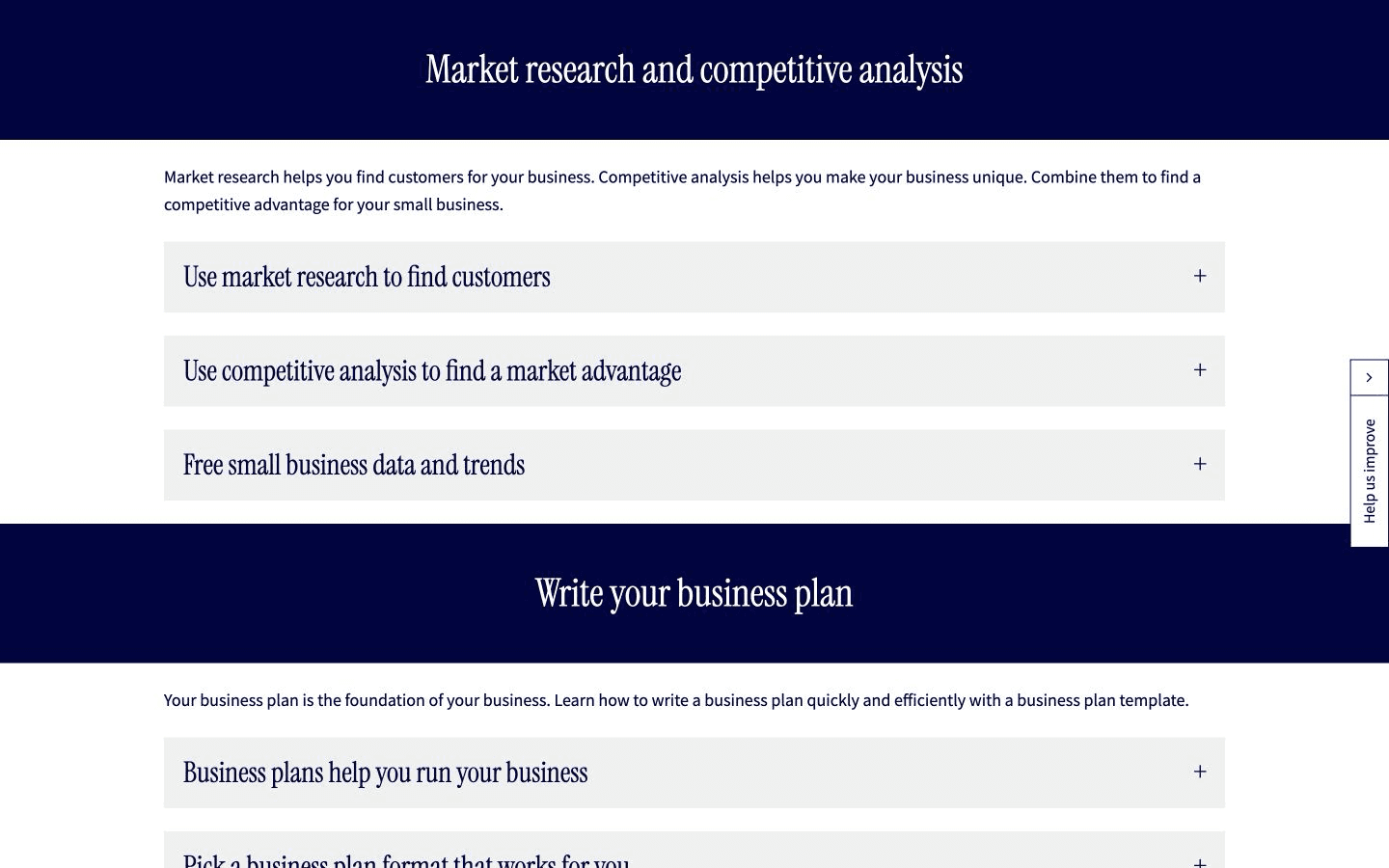
The SBA guide treats market research and business planning as founder work to complete before launch.
U.S. Small Business Administration: Plan your businessarticle, checked September 2, 2026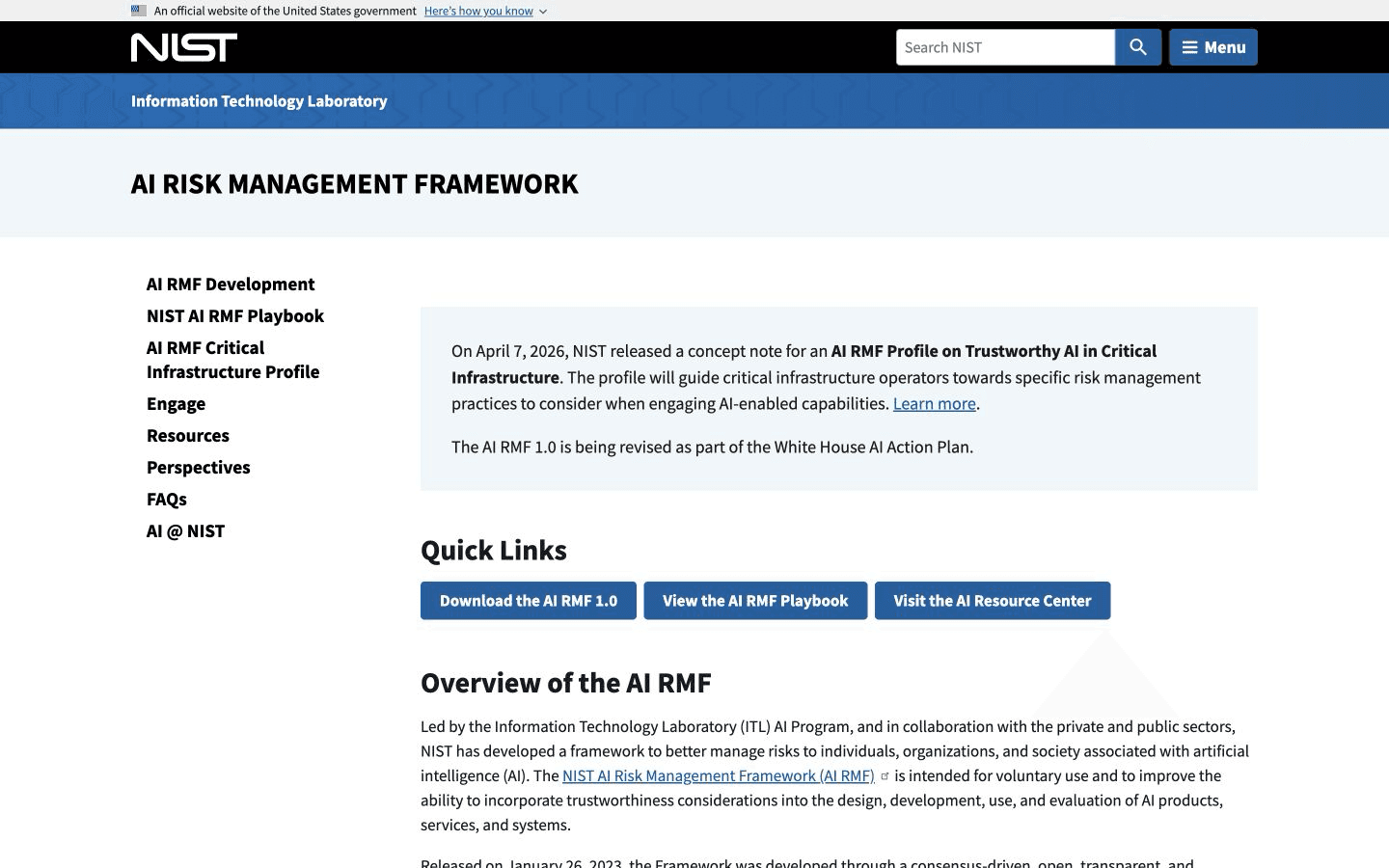
NIST’s AI Risk Management Framework offers voluntary guidance for managing AI risks. It is not a DoAny certification.
NIST: AI Risk Management Frameworkarticle, checked September 2, 2026Work across the company
What can DoAny's AI business assistant help with?
Begin with one useful job. As the company grows, DoAny can help connect the work around it instead of leaving you with a pile of separate answers.
- A clearer direction
Research before you commit
Explore the idea, market, audience, and competing offers so you can make a better-informed decision before building.
- A business people can grasp
Shape the offer
Turn what you know into a focused product, promise, audience, and message that people can understand.
- A real front door
Build the product and website
Move from an idea to a useful online product and a website that explains what it is, who it is for, and what to do next.
- Daily visibility work
Get found every day
Annie posts daily in the feeds and communities your buyers already trust, works on search and AI-answer visibility, and does outreach. Nobody can guarantee rankings or leads.
- Sales that keep moving
Follow up with interested people
Annie does outreach, runs the CRM, and follows up with interested people. You set the price and every promise.
- Customers answered, day and night
Answer customers
Annie answers customer questions around the clock and handles routine follow-up, while exceptions and important decisions stay with you.
How it works with you
How to brief an AI business assistant
The best first job is frequent, visible, and easy to review. Start there, then keep steering.
Describe the business goal
Start with the company you want to build or one business job that needs attention. Plain language is enough.
Let Annie work in context
Research, the product and website, posting, outreach, and customer replies all stay connected to the same business.
Review the important actions
Check public claims, customer messages, prices, payments, and other consequential actions before they take effect.
Keep directing the company
Ask for a revision, change the audience or offer, pause, or give Annie the next useful job.
Choose by the job
Which kind of AI assistant does your business need?
Use a chat assistant for occasional thinking. Use a specialist tool for one stable workflow. Use DoAny when work across the company needs to move together.
Swipe to compare every column.
| Dimension | General chat assistant | DoAny |
|---|---|---|
| Main job | Answers questions and creates drafts in a conversation | Researches and builds a new online business, then markets, sells, and supports it every day |
| Starting point | A prompt and the context supplied in that conversation | A company goal or a business task in plain language |
| Where work lands | In the conversation until you transfer or apply it | In a live product and website, daily posts, the CRM, and customer conversations |
| Control | You review and transfer the result into your workflow | You steer the company and review important actions |
| Best fit | Standalone research, reasoning, writing, or analysis | Founders who need help across the company-building cycle |
Five category facts
The four types of AI business assistant
The right choice depends on where the work starts, where it lands, and what you can review. The observations below are limited to what each provider says on its own public page.
Swipe to compare every column.
| Category | Verified first-party fact | Question for the founder |
|---|---|---|
| General-purpose business AI | OpenAI publishes a dedicated ChatGPT Business plan.OpenAI: Business pricingofficial product, checked September 3, 2026 | Will the result stay in chat, or become inspectable work in the system where your business runs? |
| Connected-workflow automation | Zapier presents its AI offering around orchestration across connected tools and workflows.Zapier: Zapier AIofficial product, checked September 2, 2026 | Which systems can it reach, what triggers an action, and where is approval required? |
| CRM-centered agents | HubSpot presents AI agents for marketing, sales, and customer service.HubSpot: Agent Hubofficial product, checked September 3, 2026 | Do you need depth inside an existing CRM, or are you still researching and building the company itself? |
| Knowledge-workspace AI | Notion presents agents, enterprise search, and AI meeting notes inside its workspace.Notion: Notion AIofficial product, checked September 3, 2026 | Is the main job finding and transforming existing knowledge, or creating a product and public website? |
| Creative-suite AI | Canva describes Magic Studio as a suite of AI features inside its visual-content product.Canva Newsroom: Introducing Magic Studioarticle, checked September 3, 2026 | Do you need production inside a design tool, or shared company context across research, product, and website work? |
Founder control
What you should still decide yourself
DoAny does the daily work, and the company is yours: you can export your code and data anytime. You remain responsible for the company’s promises and for decisions that affect customers or third parties. The Terms of Service set out those responsibilities in full.
DoAny does
- Research before building
- The product and website, hosted
- Daily posts, search visibility, and outreach
- The CRM, sales follow-up, and customer replies around the clock
You remain responsible for
- Public claims, prices, refunds, and promises
- Customer-facing messages and account actions
- Privacy, consent, security, and compliance
- Regulated, specialist, and high-risk decisions
Risk belongs in the workflow
What should a founder review before using AI output?
Use AI to make review easier, not to skip it. These are practical starting points, not legal, tax, security, or compliance advice. Requirements vary by business and jurisdiction.
Swipe to compare every column.
| Decision | Lower-risk starting task | Founder review before use |
|---|---|---|
| Public AI or performance claims | Prepare a draft, list every factual claim, and assemble the available evidence. | Confirm that every express and implied claim is accurate, supportable, and specific to the product people will receive.U.S. Federal Trade Commission: A million-dollar blunder: How the FTC accessiBe settlement can help your business avoid similar misstepsarticle, checked September 3, 2026 |
| Advertising and landing-page copy | Draft alternatives and flag promises about price, outcomes, endorsements, or comparisons. | Check the full impression of the advertisement, including qualifications and information a customer needs to avoid being misled.U.S. Federal Trade Commission: Advertising FAQ's: A Guide for Small Businessarticle, checked September 3, 2026 |
| Commercial email and follow-up | Prepare message drafts, audience notes, and a reviewable follow-up sequence. | Check sender details, subject lines, postal address, and opt-out handling, plus any other laws and platform rules that apply.U.S. Federal Trade Commission: CAN-SPAM Act: A Compliance Guide for Businessarticle, checked September 3, 2026 |
| Company setup and official filings | Organize questions, deadlines, and links into a checklist for the founder. | Verify the jurisdiction and current requirements, then complete registrations, licenses, tax, and other filings through the responsible authority or a qualified professional.U.S. Small Business Administration: Launch your businessarticle, checked September 3, 2026 |
| AI use and sensitive business data | Document the intended use, data involved, assumptions, limits, and human review points. | Assess validity, privacy, security, monitoring, and failure handling before relying on the workflow.NIST: AI Risk Management Frameworkarticle, checked September 2, 2026 |
A clear fit check
Is DoAny the right AI assistant for your business?
DoAny is built for founders starting an online business. Here is when it fits, and when a specialist tool is the better choice.
DoAny is a strong fit if
- You are starting a new online business or product.
- You want help beyond writing and brainstorming.
- You are a solo, small-team, or non-technical founder.
- You want research, product, website, marketing, sales, and support in one company context.
- You are willing to review consequential actions.
Use a specialist instead if
- Your only need is calendar, meeting, inbox, or phone assistance.
- You want fully unattended high-risk decisions.
- You need legal, medical, tax, financial, or other professional advice.
- Your business has no meaningful online product or operating surface.
Start at your pace
Try DoAny on Free.
Move to a paid plan when you need more capacity. Current allowances and plan prices live on one page.
Sources and further reading
Sources and further reading
These direct links cover market research, launch steps, AI risk, advertising claims, commercial email, and practical startup advice. Each entry shows when it was last checked for this page.
- U.S. Small Business Administration: Plan your businessarticle, checked September 2, 2026
- U.S. Small Business Administration: Launch your businessarticle, checked September 3, 2026
- NIST: AI Risk Management Frameworkarticle, checked September 2, 2026
- U.S. Federal Trade Commission: A million-dollar blunder: How the FTC accessiBe settlement can help your business avoid similar misstepsarticle, checked September 3, 2026
- U.S. Federal Trade Commission: Advertising FAQ's: A Guide for Small Businessarticle, checked September 3, 2026
- U.S. Federal Trade Commission: CAN-SPAM Act: A Compliance Guide for Businessarticle, checked September 3, 2026
- Y Combinator: Y Combinator's essential startup advicearticle, checked September 3, 2026
- Shopify: How AI assistants can help a businessarticle, checked September 3, 2026
Questions, answered plainly
AI business assistant FAQs
What is an AI business assistant?
An AI business assistant is software that helps complete defined business work such as research, drafting, organization, follow-up, and supported operational tasks. Unlike a simple question-and-answer tool, it can help move work into the systems where the business is built and run.
What does DoAny's AI business assistant do?
DoAny researches an idea and market and builds the product and website. Then Annie posts daily, does outreach, runs the CRM, and answers customers around the clock. The founder sets direction and approves the big calls.
How is DoAny different from a general AI chatbot?
A general chatbot is useful for answers, analysis, and drafts. DoAny is organized around an online company, so the conversation leads into research, the product and website, and the daily marketing, sales, and support work that follows.
What can an AI assistant do for a small business?
For a small business, an AI assistant can help research, draft, organize, and prepare repeatable work. DoAny is built for starting a new online business, or a new DoAny project around an idea you already understand.
What should I delegate first?
Start with one frequent, visible, lower-risk job. A market brief, clearer website offer, search content plan, outreach draft, or customer follow-up workflow is easier to review and improve than a vague instruction to run everything.
Will DoAny take actions without my approval?
Turning on payments, rendering paid media, starting a new recurring job, and connecting an outside account each stop at an approval card, and typing “yes” in chat never counts. Everyday work you have set up, such as Annie’s daily posts, runs without a card for each item, and every scheduled task can be paused. Credits stop hard, with no overage or automatic recharge.
Do I need technical skills or a team?
You can start in plain language and do not need to code to begin. Specialist integrations, regulated uses, and high-risk decisions may still require testing and qualified human expertise.
How much does DoAny cost?
Free is $0, and it can go live and take real payments through Stripe. Pro starts at $25 per month with 100 monthly credits and adds custom domains and unlimited team members. DoAny takes 0% of your sales on every plan (Stripe’s fees still apply), and hosting uses no credits. Top-ups add capacity; see the pricing page for current allowances and larger plan sizes.
Does an AI business assistant replace employees?
It can take on parts of repeatable workflows and reduce the amount of manual work a founder needs for some business functions. It does not remove human accountability for judgment, relationships, quality, compliance, or work requiring professional expertise.
Does DoAny guarantee rankings, customers, or revenue?
No. DoAny does the daily work: search visibility, daily posts, outreach, the CRM, and customer replies. Results still depend on the market, offer, pricing, competition, execution, platform rules, and customer behavior.
One useful job first
Give Annie the work that comes next.
Describe the online business you want to start or the product idea you want to shape. Start in plain language. Review the important choices. Keep directing what happens next.